




Department of Microbiology
INTRODUCTION OF DEPARTMENT – Microbiology
ABOUT THE DEPARTMENT:
- HISTORY: The Microbiology Department in Maharajah’s College (Autonomous) has been started in 2025-26 offering B. Sc honours Microbiology (major). This course follows Semester end examinations pattern as per APSCHE Curriculum. The Department of Microbiology has a student intake of 50. Department has been maintaining a separate departmental Library for catering to the needs of both teachers and students. There are around 200 books in the Department Library. The Department consists of qualified, well experienced, dedicated faculty and well established laboratories.
- VISION AND MISSION: The aim of the department is to provide quality education to the students. We not only aim on theoretical knowledge but also provide the practical knowledge and expose their knowledge to the developing society so that they can contribute in the development of the Nation and build their future in a better way.
The Department aims to develop competent and committed students with advanced level of communicative skills and attitude required to manage academia-industry interface. The Department endeavours for continuous up gradation and dissemination of knowledge, creating and developing highly adaptable skills for suitable employment. The Department inspires uncompromising commitments to teaching and to develop practical oriented facilities.
ABOUT THE COURSE:
Microbiology is a broad discipline of Applied Sciences which deals with the world of microorganisms that are, too small to be seen with the naked eye. We are born into a world dominated by microorganisms, many of which carry out important functions essential for all the life on earth. As a consequence, we have countless intimate microbial associations; many enhance our lives, while others present us with potentially lethal challenges. The discipline of Microbiology overlaps with the other degree areas of biology like molecular biology, biotechnology, genetics, immunology and pathology. Further the scope of Microbiology is vast extending to various fields such as Pharma, Agriculture, Medicine, Food and dairy industry, Clinical research and Nanotechnology.
Programme
| Programme | Intake | Major | Minor | Certificate Course |
| B.Sc Honours | 50 | Microbiology | Chemistry | Clinical Techniques |
Lab Infrastructure
| S. No. | Name of the Instrument | Model & Specifications | Possible research experiments conducted | Picture of the Instrument |
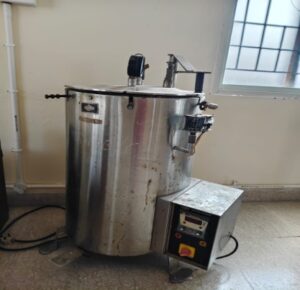
| 1. | Autoclave | Kemi, Digital display Temp. 121°C, 15 lbs pressure, 50 litres capacity | 1. Preparation of Sterile Culture Media 2. Sterilization Efficiency Studies 3. Microbial Load Reduction Experiments | ![]() |
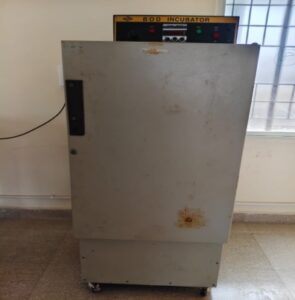
| 2. | BOD Incubator | Kemi, Model No. KBOO-6S Temp. range 0 – 65 °C, 180 Litres capacity | 1. Biochemical Oxygen Demand (BOD) Studies 2. Wastewater Treatment Research 3. Microbial Growth Studies at Low Temperatures 4. Shelf-life analysis of refrigerated foods | ![]() |
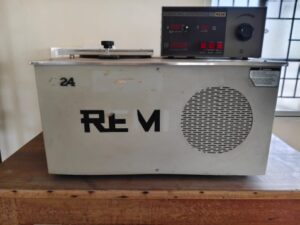
| 3. | Cooling centrifuge | Remi C24, S/No. IXCI-7690 20000 rpm, Temp. upto – 20°C | 1. DNA, RNA, and Plasmid Isolation 2. Protein Purification and Enzyme Studies 3. Cell Fractionation / Subcellular Organelle Isolation 4. Microbial Cell Harvesting | ![]() |
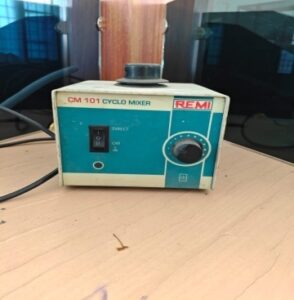
| 4. | Cyclomixer | Remi, CM101 2500 rpm | 1. Mixing of Microbial Cultures 2. DNA, RNA, and Protein Extraction 3. Enzyme Assays and Biochemical Reactions | ![]() |
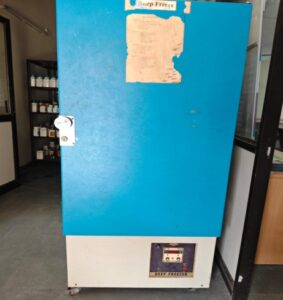
| 5. | Deep Freezer | Kemi, Temp.- 20°C, 200 Litres capacity | 1. Long-term Preservation of Microorganisms 2. DNA, RNA, and Enzyme Stability Studies | ![]() |
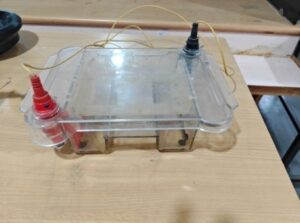
| 6. | Electrophoresis apparatus | Genei, 200 x 100 x 110 mm | 1. DNA Separation and Analysis 2. RNA Separation and Analysis 3. Protein Separation and Analysis | ![]() |
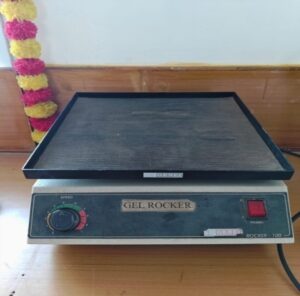
| 7. | Gel rocker | Genei Rocker 100 | 1. Used in Nucleic Acid and Protein Gel Procedures 2. Used in immunoassays 3. Maintains gentle mixing | ![]() |
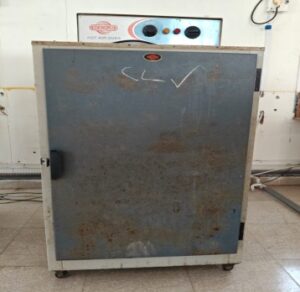
| 8. | Hot air oven | Kemi, Model No. KOS-6 Temp. upto 250°C | 1. Sterilization of glassware | ![]() |
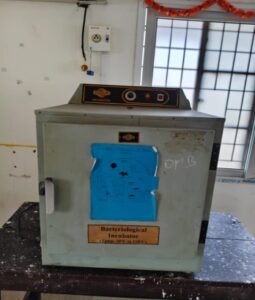
| 9. | Incubator | Kemi, Model No. K143 Temp. range 30 – 110 °C, 95 Litres capacity | 1. Microbial Growth & Culture Studies 2. Antibiotic Sensitivity & Resistance Testing 3. Enzyme Production & Metabolic Studies 4. Water, Food, and Air Quality Testing 5. Fermentation & Bioprocess Experiments | ![]() |
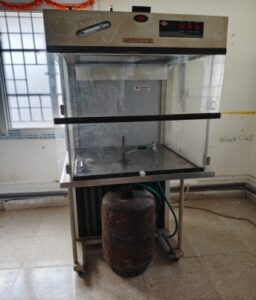
| 10. | Laminar Air flow Cabinet | Kemi, Model No. KLF155 2’ x 2’ size, HEPA Filter, U.V. Germicidal Light | 1. Aseptic Transfer of Microbial Cultures 2. Preparation of Media Plates & Broth 3. Genetic Engineering & Molecular Biology 4. Antibiotic Sensitivity & Pathogen Handling 5. Microbiological Counting & Dilution Experiments 6. Fermentation & Enzyme Production Studies | ![]() |
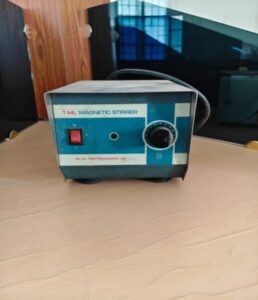
| 11. | Magnetic stirrer | Remi- 1ML, stirring capacity 1 Litre | 1. Preparation of Culture Media 2. Buffer and Reagent Preparation 3. Enzyme Kinetics & Biochemical Assays 4. Solubility & Dissolution Studies | ![]() |
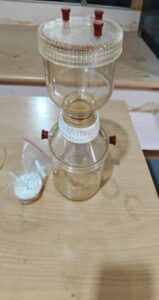
| 12. | Membrane Filter Equipment | Tarson Membrane filter holder 47mm | 1. Sterilization of Solutions 2. Used in Water quality testing 3. Nucleic acid and protein purification 4. Used in Environmental monitoring 5. Sterility testing of drug products | ![]() ![]() |
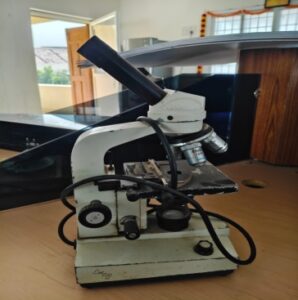
| 13. | Microscope | Lawrence & Mayo, objective lenses 4x, 10x, 45x and 100x | 1. Observation of microorganisms (bacteria, fungi, algae and protozoa) 2. Observation of blood and other body fluids 3. Water Quality Testing 4. Monitoring Cell Division | ![]() |
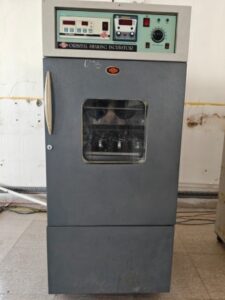
| 14. | Orbital shaking Incubator | Kemi, Model No. KO81-1 Temp. range 5°C-60°C 50-250 rpm | 1. Microbial Growth & Cultivation Experiments 2. Fermentation Experiments 3. Recombinant DNA & Biotechnology Research 4. Enzyme and biofuel Production Studies | ![]() |
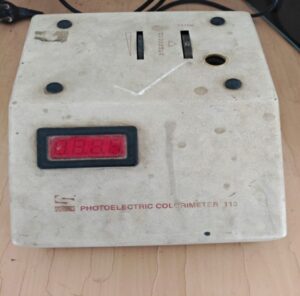
| 15. | Photoelectric colorimeter 113 | Systronics, Wave length range 430, 470, 520, 550, 580, 610 and 700 nm | 1. Estimating concentrations of biomolecules 2. Monitoring enzyme kinetics: 3. Drug concentration analysis . 4. Measuring bacterial growth indirectly 5. Quantifying products of microbial metabolism that produce or alter colors. | ![]() |
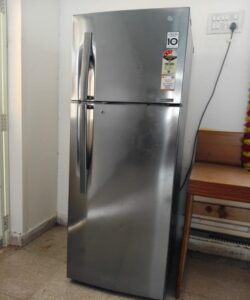
| 16. | Refrigerator | LG, 308 Litres, storage 280 Litres | 1. Storage of Microbial Cultures 2. Storage of Media, Reagents & Chemicals | ![]() |
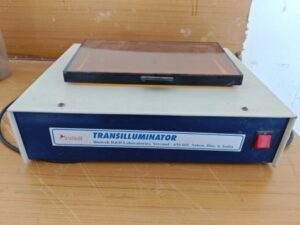
| 17. | Transilluminator | Biotech 360 nm wavelength view area 25x13cms | 1. Visualization of DNA and RNA in Gels 2. Documentation and Imaging to capture high-resolution images of gels. 3. DNA Extraction and Gel Purification 4. Fluorescent Dye-Based Assays 5. Essential for molecular cloning and genetic engineering workflows. | ![]() |
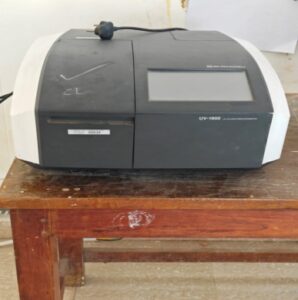
| 18. | UV -Vis Spectrophotometer | Shimadzu UV1900, SNo A124256, wavelength range 190 – 1100nm, readability 0.01nm | 1. Quantification of Nucleic Acids (DNA/RNA) 2. Protein Estimation Experiments 3. Enzyme Kinetics & Activity Studies 4. Microbial Growth Studies 5. Colorimetric Biochemical Assays | ![]() |
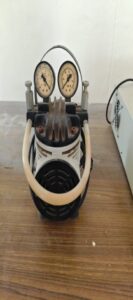
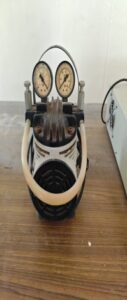
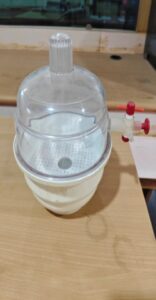
| 19. | Vacuum pump with desiccator | 1. Cultivation of anaerobic microorganisms | ![]() ![]() | |
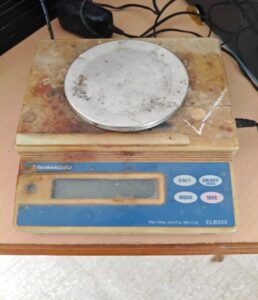
| 20. | Weighing balance | Shimadzu ELB 300 Max capacity:300 g (analytical) Min – 0.2 g | 1. Used in Accurate Measurement of Chemicals 2. Used to quantify: Composite materials, Media, Powders, Cell dry weight | ![]() |
Outcomes
The overall aims of the programme may be achieved by addressing its various components that are incorporated into the curriculum as described below. Each of these components is designed to lead to specific outcomes that are desired after the successful completion of the programme.
PO No. | Component
| Outcomes |
PO1 | Basic Knowledge | Capable of delivering basic disciplinary knowledge gained during the programme. |
PO2 | In-depth Knowledge | Capable of describing advanced knowledge gained during the programme. |
PO3 | Critical thinking and Problem-Solving abilities | Capable of analysing the results critically and applying acquired knowledge to solve the problems. |
PO4 | Creativity and innovation | Capable to identify, formulate, investigate and analyze the scientific problems and innovatively to design and create products and solutions to real life problems. |
PO5 | Research aptitude and global competency | Ability to develop a research aptitude and apply knowledge to find the solution of burning research problems in the concerned and associated fields at global level |
PO6 | Holistic and Multi disciplinary education | Ability to gain knowledge with the holistic and multi-disciplinary approach across the fields. |
PO7 | Skills enhancement | Learn specific sets of disciplinary or multidisciplinary skills and advanced techniques and apply them for betterment of mankind. |
PO8 | Leadership and Teamwork abilities | Ability to learn and work in a group and capable of leading a team even. |
PO9 | Ethical thinking and Social awareness | Inculcate the professional and ethical attitude and ability to relate with social problems. Learn important aspects associated with environmental and human health. Ability to develop eco-friendly technologies. |
PO10 | lifelong learning skills and Entrepreneurship | Ability to learn lifelong learning skills which are important to provide better opportunities and improve quality of life. Capable to establish independent start-up/innovation center etc. |
PROGRAMME SPECIFIC OUTCOMES (PSOs)
The under graduates shall be able to realize the following specific outcomes by the end of program studies:
PSO No. | Programme Specific Outcomes |
PSO1 | To Develop a solid understanding on the fundamental principles and major concepts in the core disciplines of Microbiology with the ability to analyze at an advanced level. |
PSO2 | To train the students in basic and advanced areas of Microbiology, focusing on the recent trends of the discipline with Particular emphasis on the practical aspects. |
PSO3 | Equip the students to perform standard laboratory procedures, monitor by observation and measurement events or changes and record data |
PSO4 | To develop research and analytical skills in basic research with the ability to undertake research in multidisciplinary teams. |
PSO5 | To provide a detailed training in written and verbal communication of scientific information and ideas. |
PSO6 | To develop an overview of the role of Microbiology in day today life and in industry for sustainable civilization. |
PSO7 | To stimulate scholarly progression and intellectual development of the programme grooming the students on par with excellence. |
PSO8 | To promote talent and personality development boosting self-confidence and self-reliance in the student to achieve their goals |
PSO9 | To instil moral values of professional ethics in students guiding them to be responsible individuals for a better society. |
PSO10 | To develop ability to work independently or as part of a team in a research setting to adapt to wide range of available career option in the future. |
Research Publications
Dr. K. Sunita Raju
- Kutcharlapati Sunita Raju, ‘ Formulation of Antimicrobial Mouthwash and Comparison with Commercial Mouthwashes’, International Journal for Multidisciplinary Research (IJFMR), Volume: 5, Issue: 5, DOI: 36948/ijfmr.2023.v05i05.6775, September-October 2023.
- Kutcharlapati Sunita Raju, ‘Alternative Culture Media for Cultivation of Bacteria’, International Journal of Science and Research (IJSR), Volume: 09, Issue: 3, 1174-1176, March 2020.
- Kutcharlapati Sunita Raju, ‘Comparison of antifungal activity of plant extracts and shampoos against dandruff causing organism Malassezia species’, International Journal of Advance Research, Ideas and Innovations in Technology, Volume: 05, Issue: 03, 1008-1013, May-June 2019.
- Layam Anitha ,Pooja Mandlik , Sunitha Raju K , Purnanand D, Kshatri L J Durga , Seshadri Naidu , Subash Chandra Bose K , Sunder Singh Dhakar , Monali Mukherjee , Sri Harsha and Naushad Ahmed., ‘Estimation Of Free Fatty Acids, Peroxide Value And Trans Fatty Acids In Reheated And Reused Oils Of Deep Fat Fried Street Foods’, Research Journal of Science and IT Management, Volume: 05, Number: 11, September – 2016.
- Anitha, L., and Sunita Raju, K., ‘A Review on Antimicrobial Activity of Vegetables, Herbs and Spices against Cariogenic Bacteria’, Research & Reviews:Research Journal of Biology, Volume: 04, Issue: 04, 12-20, October – December, 2016.
- Sunita Raju, K., and Anitha, L., ‘Isolation and Identification of Oral flora from individuals belonging to ages 7 to 16 years’ , Research Journal of Science and IT Management, Volume: 04, Number: 03, 5-11, January-2015.
- Kalla, A. ,Kutcharlapati, S. , Gannavarapu, S. and Layam, A., ‘Isolation and Identification of Specific Pathogens, Presence of Antibiotics, Aflatoxins, Pesticide Residues and Industrial Contaminants in Supply Chain of Milk in Selected Coastal Districts of Andhra Pradesh’. Advances in Bioscience and Biotechnology, 6, 330-344, 2015.
- SunitaRaju, K., Appala Naidu, K., and Anitha, L., ‘Impact of vegetable extracts on selected cariogenic bacteria’, Research Journal of Science and IT Management, Volume: 03, Number: 12, 58-65, October-2014.
Book chapter Publications:
- Kutcharlapati Sunita Raju(2020) Antimicrobial activity of selected natural extracts on cariogenic bacteria. In Gnanamangai, B.M., Ayyappadasan, G., Senthil Kumar, J. (Eds.), Research Methodology (1st ed., Volume 2, pp. 01-12). Delhi, India. AkiNik.
Smt. N. S. Rama Devi
- Satya Rama Devi Nowpada, ‘Production and optimization of ethanol production from spent tea waste using Saccharomyces cerevisiae’, International Journal of Advance Research, Ideas and Innovations in Technology, Volume: 06, Issue: 02, 442-446, Apr-May 2020.
- Satya Rama Devi Nowpada, ‘Production and optimization of ethanol production from fruit and vegetable waste using Saccharomyces cerevisiae’,International journal of creative research thoughts , Volume: 08, Issue : 04, 2912-2919, April 2020
- Satya Rama Devi Nowpada, ‘ Corona Virus- A Silent Slayor’, International journal of science and research , Volume: 09, Issue: 04, 1722-1723, April 2020
- Satya Rama Devi Nowpada, ‘Characterization of Marine bacteria colonizing wood in Visakhapatnam harbor’ paper posted in research gate
https://www.researchgate.net/publication/341597981_Chacterization_of_marine_bacteria_colonizing_wood_in_Visakhapatnam_harbour

N.Satya Rama Devi
Assistant Professor

Dr. Kutcharlapati Sunita Raju
Assistant Professor