
Department of Zoology
The Department of Zoology has been functioning since 1940 in Maharajah’s Autonomous College. Initially the department was started with two faculty members and thirty students.The department was led by Sri.Raghunadhacharya as a lecturer and Head of the department of Biology.Zoology main was established in the year 1954 under the able leadership of Sri K. Suresh Kumar and he worked as the head of the Department since 1954 to 1986.Later the department was headed by stalwarts like Sri.B.V.Gopalachary, Dr. R. Sri Ramamurthy, Dr. M.P.Radha Krishna Rao, Dr. B. Narayana Rao,Mrs. Usha Mani Anand and Dr.G.Mani . Smt.M. Lalitha Kumari T. Desi Raju and Miss A. Kamalamma who joined initially as Demonstrators, became lecturers after venturing higher education. At present, Mr. D.Satya Siva Ganesh is leading the department with the assistance of Mr.A.Gopal, Kum.K.Radha, Sri.S.Nagaraju. The Department has a well equipped library with more than 1000 books and a well maintained Museum with around 2500 specimens,2 human skeletons, stuffed birds & 50 models. The well maintained and constantly updated two laboratories have facilities such as laminar flow chamber, Thermal Centrifuge, hot air oven, incubator, autoclave, refrigerator, Ermascope etc
Vision & Mission
Budding Students of today, who are aware of life’s process shall live harmoniously in the web of life.
To acquire knowledge on the taxonomic status of various animals and its relationship to man.
To develop research aptitude and a scientific advancement.
To develop overall personality of the students through value oriented counseling which will help them in facing the challenges of life.
To inculcate a sense of social responsibility among the students by involving them in community service activities.
To develop an aptitude for understanding nature and its rich biodiversity.
Programme
PROGRAMME | No. SEATS ALLOTTED | Major | Minor | Complementary Courses | Syllabus |
B.Sc. (Hons) | 61 | Zoology | Botany/ Chemistry | Skill Courses and Multi Disciplinary Courses |
Facilities
- Add on / Certificate courses
- Online and offline classes for PG and other entrance tests at State and Central Universities
- Well equipped laboratories
- ICT Class rooms
- Remedial classes for dull students
- Industry and field visits
- Co-curricular and extra curricular activities
- Career guidance
- Mentor-mentee system
- Student seminars
- Guest Lectures
PROGRAMME OUTCOMES (POs)
The overall aims of the programme may be achieved by addressing its various components that are incorporated into the curriculum as described below. Each of these components is designed to lead to specific outcomes that are desired after the successful completion of the programme.
PO No. | Component | Outcomes |
PO1 | Basic Knowledge | Capable of delivering basic disciplinary knowledge gained during the programme. |
PO2 | In-depth Knowledge | Capable of describing advanced knowledge gained during the programme. |
PO3 | Critical thinking and Problem-Solving abilities | Capable of analysing the results critically and applying acquired knowledge to solve the problems. |
PO4 | Creativity and innovation | Capable to identify, formulate, investigate and analyze the scientific problems and innovatively to design and create products and solutions to real life problems. |
PO5 | Research aptitude and global competency | Ability to develop a research aptitude and apply knowledge to find the solution of burning research problems in the concerned and associated fields at global level. |
PO6 | Holistic and Multi- disciplinary education | Ability to gain knowledge with the holistic and multi-disciplinary approach across the fields. |
PO7 | Skills enhancement | Learn specific sets of disciplinary or multidisciplinary skills and advanced techniques and apply them for betterment of mankind. |
PO8 | Leadership and Teamwork abilities | Ability to learn and work in a group and capable of leading a team even. |
PO9 | Ethical thinking and Social awareness | Inculcate the professional and ethical attitude and ability to relate with social problems. Learn important aspects associated with environmental and human health. Ability to develop eco-friendly technologies. |
PO10 | lifelong learning skills and Entrepreneurship | Ability to learn lifelong learning skills which are important to provide better opportunities and improve quality of life. Capable to establish independent start-up/innovation center etc. |
PROGRAMME SPECIFIC OUTCOMES (PSOs)
The post graduates shall be able to realise the following specific outcomes by the end of program studies:
PSO No. | Programme Specific Outcomes |
PSO1 | Gain in-depth knowledge of the structure, function, classification, and ecological roles of animals across diverse taxa. |
PSO2 | Develop skills in designing experiments, conducting research, and analyzing biological data using modern tools and techniques. |
PSO3 | Apply theoretical principles of Zoology to address real-world challenges in biodiversity conservation, public health, and sustainable development. |
PSO4 | Understand the integration of Zoology with related fields such as genetics, biochemistry, biotechnology, and environmental science. |
PSO5 | Acquire hands-on experience in laboratory techniques such as microscopy, dissection, molecular analysis, and fieldwork for ecological and biodiversity studies. |
PSO6 | Cultivate awareness of environmental issues and contribute to conservation efforts and sustainable practices. |
PSO7 | Establish a strong foundation for pursuing higher education (M.Sc., Ph.D.) and careers in teaching, research, healthcare, and conservation. |
PSO8 | Foster an understanding of ethical issues in biological research and a commitment to using knowledge for the benefit of society. |
PSO9 | Enhance critical thinking skills to evaluate scientific information and solve biological problems systematically. |
PUBLICATIONS
| Journal Publications
| |||||
S.No | Title of the paper | Name of the authors
| Name of the journal | Volume, Issue, Page Number, year of publication | ISBN/ISSN number | Scopus/SCI/ UGC Care list with Impact Factor |
1 | Impact of Overuse of Android Phones on Growth, Health, and Intellectual Abilities of Children and Adolescents: Necessity of Digital Detox | D.SATYASIVAGANESH, Ph.D Scholar(P.T), Andhra University | SOUVENIR | 8th July, 2023 | ISBN: 978-93-5917-000-8 |
|
2 | Design Thinking: Enhancing Pre-Service Teachers Internship through Reflective Practice | D.SATYASIVAGANESH,Ph.D Scholar(P.T), Andhra University | SOUVENIR | 8th July, 2023 | ISBN: 978-93-5917-000-8 |
|
3 | A Study on the Importance of Guidance and Counseling at Secondary School Level Children | D.SATYASIVAGANESH,Ph.D Scholar(P.T), Andhra University | SOUVENIR | 8th July, 2023 | ISBN: 978-93-5917-000-8 |
|
4 | ATTITUDE OF TEACHERS TOWARDS IN-SERVICE TRAINING PROGRAMMES FOR QUALITY IMPROVEMENT IN TEACHING IN THE SECONDARY SCHOOLS OF VIZIANAGARAM DISTRICT | D.SATYASIVAGANESH,Ph.D Scholar(P.T), Andhra University | JCR | Feb 2024 | 2394-5125 | Scopus |
5 | Impact of lifelong learning on Professional and Personal Development of an educator | D.SATYASIVAGANESH,Ph.D Scholar(P.T), Andhra University | SOUVENIR | 12th Nov, 2024 | ISBN:978-93-93402-33-2 |
|
6 | “Toxicological and hematological assessment of azoxystrobin in freshwater fish: A study on grass carp (Ctenopharyngodon idella)” | Gopal, A., Gurubilli, C. R., Mudunuru, S., & Rathnamma, V. | African Journal of Biomedical Research | December 2024 | 6996–7003 | Scopus |
7 | Design Thinking: Enhancing Pre-Service Teachers Internship through Reflective Practice | S.NAGARAJU,,Ph.D Scholar(P.T), Andhra University | SOUVENIR | 8th July, 2023 | ISBN: 978-93-5917-000-8 |
|
8 | “Innovative Approaches in Teacher Education and Inclusive Reforms: A Pathway to Transforming India’s Education System under NEP 2020” | S.NAGARAJU,,Ph.D Scholar(P.T), Andhra University | CONFERENCE PUBLICATION | 12th Nov, 2024 | ISBN:978-93-93402-33-2 |
|
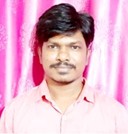
SATYA SIVA GANESH DONKADA
Assistant Professor
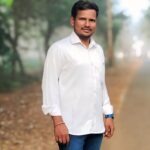
ANAPANA GOPAL
HOD & Assistant Professor
RADHA KODITHALA
Assistant Professor