


Department of Mathematics
As a matter of pride the Department of Mathematics was established by two eminent Mathematics Satyanarayana and Sri Vanga Madhava Rao in the year 1881. The Department started offering graduation courses with Astronomy and Solid Geometry. It has the distinction as the first Science group introduced in the College. Since its inception it has been working in tune with the mission of Andhra University to promote teaching, Research and extension. The department was enriched with loving blessings of the stalwarts of yester year ,Late Sri Karri Subba Rao ,late Sri Sonti Purushotham ,P.Somanadham ,late Sri .G.V.R Subramanyam and the living legendary Mathematics Sri.M.Perisastry who enable the department to attain its distinction and to prove its uniqueness . There is a good track of placements in the past and every year most of the students with mathematics subject will capture the diversified jobs like defence services ,police Department jobs ,Software,Techers etc,.,.
Vision
The Department of mathematics will guide students to grow to skills to solve problems in a more logical and methodical way. It will facilitate students with analytical and scientific knowledge to contribute to the progression of the society. It will provide fundamental education through promoting research in diverse and interdisciplinary areas
Mission
To encourage the students to conduct projects to develop their analytical and logical thinking.
To make the students proficient in Mathematics, this makes them to be successful in their further studies and careers. To make a department global.
To achieve high standards of excellence in generating and propagating knowledge in Mathematics. Department is committed to providing an education that combines rigorous academics with joy of discovery.
To provide an environment where students can learn, become competent users of mathematics, and understand the use of mathematics in other drip lines.
The syllabus offered by the department with respect to semester system under CBCS at UG level is aimed to providing the students with a strong foundation of the subject and making them proficient in all aspects both theory and project so that they are ready to take up higher studies in Mathematics in any reputed institution in the world.
We are proud in making students to pursue higher studies in various Universities by organizing PGCET coaching since 2014.
Programme
PROGRAMME | SEATS | Major | Minor | SYLLABUS |
B.Sc. (Hons) in Mathematics | 100 | Mathematics | Physics Chemistry Computer Science Data Science Statistics |
A Bachelor of Science (B.Sc.) in Mathematics is an undergraduate degree program that typically takes three years (four years for B.Sc.(Hons)) to complete. The program covers a variety of mathematical topics, including: Calculus, Algebra, Geometry, Statistics, Trigonometry, Analytical geometry, and Computer languages. The program helps students develop analytical, logical, and interpretive skills, as well as the ability to solve problems using critical observation. These skills are valuable in many fields, including engineering, finance, natural science, and social science. Mathematics is the study and investigation of structure, quantity, and space. The program is designed to construct basic mathematical aptitude for crafting researchers and scientists of tomorrow for addressing the needs of the next century. They can also pursue masters program in Mathematics after graduation.
THE AIMS OF THE PROGRAMME INCLUDE
- Developing analytical and critical reasoning skills
- Students should be able to present logical arguments and solve problems.
- Building a foundation for higher studies
- Students should gain a thorough knowledge of core topics and be able to apply them to other areas, such as computer science or physical science.
- Learning to work in teams
- Students should be able to work effectively with others to achieve a common goal.
- Communicating effectively
- Students should be able to communicate mathematical ideas and concepts clearly and coherently. Encourage the students to develop a range of generic skills helpful in employment, internships and social activities.
- Applying mathematics to real-world problems
- Provide students/learners sufficient knowledge and skills enabling them to undertake further studies in mathematics and its allied areas on multiple disciplines concerned with mathematics. Students should be able to apply mathematical techniques and algorithmic principles to model and design computer systems and software.
- Preparing for competitive exams
- Students should gain the knowledge and skills needed to prepare for competitive exams.
COURSE STRUCTURE:
Maharajah’s College (A) of is rated as one among the best colleges in the state of Andhra Pradesh as it set up highest standards in all areas of curricular, co-curricular and extra-curricular activities and in students’ placements. Student is supposed to study in 8 semesters of 4 years of honors course.
PROGRAM PATTERN:
B.Sc (Honours)-Mathematics, The program is for 4 academic years and 8 semesters.
AWARD OF DEGREE:
A student will be declared eligible for the award of degree if he/she fulfills the following academic regulations.
- A student shall be declared eligible for the award of degree, if he/she pursues a course of study for not less than four academic years and not more than eight academic years from the date of admission.
- The student shall register for 180 credits. The students shall secure all the credits.
- The medium of instruction for the entire under graduate program will be in English
- Students who fail to complete Four Years Course of study within 8 years shall forfeit their seat and their admission shall stand cancelled.
A typical Mathematics department offers well-equipped infrastructure, access to online resources and journals, and opportunities for research and industry collaborations, along with student organizations and support for professional development.
Here’s a more detailed breakdown of the general facilities and resources typically find Core Facilities in a Mathematics department:
| Facility | Purpose / Why it matters | Typical features |
| Lecture & Classroom Infrastructure | Good teaching needs proper space, sound/visibility, engagement tools. | Spacious lecture rooms, ICT/smart-boards, comfortable seating, good lighting & acoustics. |
| Seminar / Colloquium Room | For presentations, guest lectures, group discussions, student talks. | A room with seating for say 50, projector, podium/lectern, sometimes air-conditioning, good acoustics. |
| Departmental Library / Reference Library | Access to textbooks, reference works, journals is key for students. | A dedicated room/section with book-shelves, journals (print & electronic), comfortable reading area. |
| Computer Lab / Software Facilities | Many mathematics courses now involve computations, simulations, software (especially applied math). | PCs, software like MATLAB, Mathematica, Maple, Wi-Fi/internet access, printer, uninterrupted power. |
| Math/Model Laboratory or Practical Lab | While “lab” is more common in sciences, mathematics labs (for simulations, modelling, etc) are increasingly used. | Models or software for visualising geometry, simulations, proof-visualisation; may be a “mathematics model lab” with physical models. |
| Internet / Wi-Fi / Digital Access | Enables access to online resources (journals, e-books), remote classes, digital learning. | Department-wide Wi-Fi/wired internet, access to e-journals, perhaps laptops/kiosks. |
| Student Common Room / Study Spaces | Spaces where students can self-study, group discuss, do assignments in a comfortable setting. | Lounge with tables/chairs, whiteboards/blackboards for discussion, lockers perhaps. |
| Faculty/Student Interaction Spaces | For office hours, mentoring, informal discussion which is very helpful in math learning. | Offices for faculty with regular hours, maybe a “help room” or tutoring centre; blackboards available for students to work through problems. |
| Accessibility & Supporting Facilities | Ensures all students (including with disabilities) can use the dept.; plus, practical amenities. | Disability-friendly access, water purifier, printer/photocopy facility, smart classrooms, good ventilation & lighting. |
| Software & e-Resources / Subscriptions | Mathematics students need access to up-to-date computational tools and literature. | Licenced software (MATLAB, Mathematica, Maple, R), subscriptions to e-journals/e-books, access from computers and ideally remote access. |
Achievements
Sri C.S.K. Umasanakar
- Received Best NSSPO Award University Level By Prof. P.V.G.D. Prasad Reddy Garu, Vice Chancellor Andhra University Visakhapatnam on 26thJanuary 2021.
- Received Best NSSPOA ward District Level By Prof.PVGDPrasadReddy Gaaru,Vice Chancellor ,Andhra University Visakhapatnam on 24thSeptember 2019.
- P.Pushpasrivaani,Dupt.CMofAndhraPradesh at PTC, Vizianagaram on 15thAuguest 2019
- M.HariJawarlal,Collector of Vizianagaram at Collector Office,Vizianagaram on 26thJanuary 2021
- Received Gandhi Pratibha Puraskaram Award by SETVIZ,
Programme Outcome
The overall aims of the programme may be achieved by addressing its various components that are incorporated into the curriculum as described below. Each of these components is designed to lead to specific outcomes that are desired after the successful completion of the programme.
PO No. | component | outcomes |
PO1 | Disciplinary Knowledge | Capable of demonstrating comprehensive knowledge and understanding of one or more other disciplines that form a part of an undergraduate programme of study. |
PO2 | Critical Thinking and problem solving | Take informed actions after identifying the assumptions that frame our thinking and actions, checking out the degree to which these assumptions are accurate and valid, and looking at our ideas and decisions (intellectual, organizational, and personal) from different perspectives. Critically evaluate practices, policies and theories by following scientific approach to knowledge development. |
PO3 | Communication Skills: | Ability to express thoughts and ideas effectively in writing and orally; communicate with others using appropriate media; confidently share one’s views and express herself/ himself; demonstrate the ability to listen carefully; and present complex information in a clear and concise manner to different groups. |
PO4 | Analytical thinking | Analytical skills are the skills you use to make decisions and find solutions to problems. In the workplace, an analytical person helps the company problem-solve by breaking down information; looking through data and finding patterns, trends, and outliers; brainstorming new ideas; and making decisions on what solutions to implement. |
PO5 | Professional skills | Understand, analyze and communicate the value of their professional roles in society. |
PO6 | Moral and Ethical Awareness | Ability to embrace moral/ ethical values in conducting one’s life, possess knowledge of the values and beliefs of multiple cultures and a global perspective; and capability to effectively engage in a multicultural society and interact respectfully with diverse groups. |
PO7 | Application skills and experimental skill | Application skills and experimental skills are a broad set of skills that are used in scientific experiments, including: Planning, Experimental design, Data analysis, Communication, Safety, and Equipment use, Troubleshooting, Literature review, Evidence-based argumentation. |
PO8 | Self-directed and Life-long Learning | Acquire the ability to engage in independent and life- long learning in the broadest context socio- technological changes. Critical sensibility to lived experiences, with self-awareness and reflexivity of both and society. |
PO9 | Information and Digital Literacy | Capability to use ICT in a variety of learning situations. Demonstrate ability to access, evaluate and use a variety of relevant information sources; and use appropriate software for analysis of data. |
PO10 | Research –related skills | A sense of inquiry and capability for asking relevant/ appropriate questions, problematizing, synthesizing and articulating; Ability to recognize cause- and- effect relationships, define problems, formulate hypotheses, interpret and draw conclusions from data, ability to plan, execute and report the results of an experiment or investigation. Ability to apply one’s learning to real life situations. |
PROGRAMME SPECIFIC OUTCOMES (PSOs)
The B.Sc. mathematics graduates shall be able to realize the following specific outcomes by the end of program studies:
PSO NO. | Component | Programme specific outcome |
PSO1 | Solid Foundation in Knowledge | Bachelor Degree in Mathematics is the culmination of in-depth knowledge of many core branches of mathematics, viz. Algebra, Calculus, Geometry, Differential Equations, Mechanics, Real and Complex Analysis including some related areas like Computer Science and Statistics. Thus, this programme helps students in building a solid foundation for further higher studies and research in Mathematics. |
PSO2 | Competency in Skill | The skills and knowledge gained has intrinsic beauty, which leads to proficiency in analytical reasoning, critical understanding, analysis and synthesis in order to solve theoretical and practical problems. This can orient students towards applications of mathematics in other disciplines and moreover, can also be utilized in modeling and solving real life problems |
PSO3 | Problem Solving | Students undergoing this programme learn to logically question assertions, to recognize patterns and to distinguish between essential and irrelevant aspects of problems. This helps them to learn behave responsibly in a rapidly changing interdependent society |
PSO4 | Interdisciplinary and Research Skills | Students completing this programme will be able to present mathematics clearly and precisely, make vague ideas precise by formulating them in the language of mathematics, describe mathematical ideas from multiple perspectives and explain fundamental concepts of mathematics to non-mathematicians. |
PSO5 | Proficiency in Employments | This programme will help students to enhance their employability for Government jobs, jobs in banking, insurance and investment sectors, data analysis jobs, and jobs in various other public and private enterprises. |
S.No. | IndexIn | Titleofthe Paper | StatusofAuthor | NameoftheJournal,Vol,PageNos | NameofPublisher | Year | Weblinkofthe Paper | ISSNNo |
1 |
SCI | PERCEPTIONSOF TEACHERSTOWARDS MATHEMATICS TEACHINGITS RELATIONTO STUDENTACHIEVEMENTSATSEC |
SoleAuthor |
EDUCATIONTIMESVOLXIVPAGENO275-283 |
APH PUBLISHINGCORPORATION |
2019 |
HTTPS://WWW.TEMJOURNAL.COM/CONTENT/81/TEMJOURNALFEBRUARY2019_275_283.PDF |
2319-8265 |
2 |
UGC-CARE | PRECONCEPTIONOF MATHEMATICS TEACHERSRELATED TOQUALITY OFINTERACTIONWITHSTUDENTSANDSTUDE |
FirstAuthor |
IJCRTVOLUME10PAGENOS713-720 |
IJPUBLICATION |
2022 |
WWW.IJCET.ORG/IJPUBLICATIONS |
2320-2882 |
3 |
UGC-CARE | PERCEPTIONOF TEACHERSTOWARDS MATHEMATICS TEACHINGATSECONDARYLEVEL |
SoleAuthor |
IJCRTVOLUME10PAGE539-543 |
IJPUBLICATION |
2022 |
|
2320-2882 |
4 |
WEB OFSCIENCE | ATTITUDE OFTEACHERSTEACHING MATHEMATICSATPRIMARYLEVEL TOWARDS ACTIVITYBASED APPROACH |
FirstAuthor |
INTERNATIONAL JOURNAL OF ADVANCERESEARCH IDEAS AND INVITATIONAL INTECHNOLOGYVOL8PAGENO53T5 |
IJARIIT |
2022 |
WWW.IJARIIT.COM |
2454-132X |
5 |
WEB OFSCIENCE | ADMINISTRATIVE BEHAVIOROF THE HEADMASTERS ATSECONDARYSCHOOL LEVEL |
FirstAuthor |
INTERNATIONALJOURNALOFADVANCESINENGINEERING AND MANAGEMENT IJAEMVOL4PAGENO2652-2657 |
IJAEM |
2022 |
WWW.IJAEM.NET |
2399-5252 |
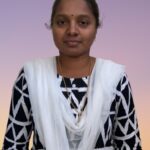
JHANSI BYPALLI
Assistant Professor
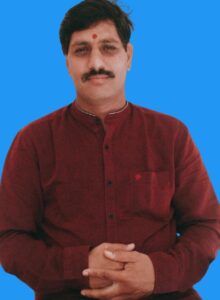
C.S.K.Uma Shankar
Assistant Professor
RAMESH DEBARIKI
Assistant Professor
N.Dharmarao
Assistant Professor
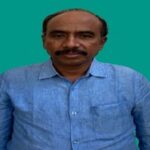
SABBAVARAPU SURIBABU
Assistant Professor

T.Swathi
Assistant Professor
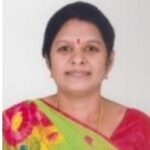
Dr. SRIDEVI TENTU
Assistant Professor
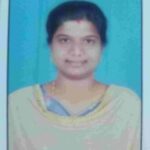
PRAGADA URMILA
Assistant Professor
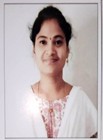
M. V. Lakshmi
Assistant Professor