08922 222001

principalmrac@gmail.com

eCAP

ePay

Div Blinking

Department of Computer Science

Department of Computer Science

The Department of Computer Science at Maharajah’s College, Vizianagaram was started as an undergraduate program offered in the year 1998. At the time of programme inception there was started with the equipment 30 no. of systems. Next shifted the department into independent building as V.G.Block in the year 2012 with the financial support to the extent of five lakh rupees given by the M.R.M.P (1960-1970) batch alumni, a separate Mathematical and Computer Science Laboratory was established in the memory of Sri B V Sanyasi Rao garu (late) (famous Mathematics teacher of M.R.M.P batch students). Adding to this support the College management extended their help to the department in the form of equipment provided like UPS and 15 more systems.

Later on days by the graces of management and the objective of the trust has been grown up the department with 6 numbers of lab infrastructures and well furnished department block.

Vision

The aim of the department is to provide quality of education to the student community in aspects of theoretical knowledge and practical orientation and we try to invoke their knowledge towards the developing society also we are taking care of the student’s candidature to build their future and career aspects towards the development of the Nation.

Mission

Imparting good quality as per the guidelines of Higher Education time to time.
Hands on expertise with various hardware and software components.
Integrated various activities of training and placements with appropriate career guidance.
Guide the students in view of CSP and Intern projects leads to Research & Development.
Industry-Institute Partnership.

Programme

Programme

No. of sections

Total intake

Total credits

Syllabus

B.Sc (H)-Computer Science


06

300

160

 CS Major

CS Minor

DS Major

DS Minor

Computer Science is the science of matter and its transformations. It addresses fundamental questions about the observable matter, ranging from its components, structure, properties and inter-conversions. As a system of knowledge, Computer Science not only explains the existence and behavior of matter around and within us, but also empowers us to manipulate the matter into new and improved forms for our use. From the ancient practices of rasayan vidya and alchemy, modern Computer Science has grown over centuries into a formidable science that touches all aspects of human life. Humanity’s progress in the last three centuries is pivoted on the contributions of Computer Science, chemical industry and associated endeavours. The range of influence of Computer Science in our life spans from essentials such as food (agrochemicals, preservatives), shelter(cement,metals,alloys,polymers) and health (drugs,cosmetics,soap,toothpaste), to advancements such as textiles(polymers,leather), beverages(flavouring and fermentation),crimefighting(forensics), weaponry(explosives), spacetravel(fuel) and cosmology (element detection31/12/2020). The list can go on endlessly. The most visible contribution of Computer Science to civilization is achieved by the advancements in modern medicine that was fuelled by organic Computer Science. This ledto significant improvements in the living standards, extension of human average life span and fighting of dangerous diseases such as cancer and microbial infections.

Computer Science is placed centrally between the other two major branches of science, namely physics and biology. Therefore, it is often called the central science. It influences the developments in these two broad realms of science as much as it is influenced by the discoveries in them. The fundamental importance of Computer Science and chemical industry insustaining human civilization demands for a steady supply of trained and skilled manpower. Thus, it is unsurprising that it is an essential and integral department in higher education institutions. Education in Computer Science not only imparts the technical know-how about structure, reactions and properties of matter, but also empowers the learner to raise fundamental questions about various natural phenomena, address local issues and come up with sustainable solutions, identify areas of life where intervention of Computer Science can bring about progress and imbibe and spread the spirit of free enquiry and scientific temper.

  • To inculcate basic and advanced knowledge of Computer among students.
  • To provide higher education, disciplinary and inter/multi-disciplinary research oriented knowledge to the students to make them lifelong learners.
  • To provide a learned, skilled and creative pool of graduates who are ready to take up challenging assignments in different kinds of computer industries, research institutions and academia.
  • To mould responsible, pro active citizens who are equipped with scientific thinking and skills to address problems of their locality.
  • Adequate blend of theory, computation and hands-on experiments.
  • Modernized lab courses – close to recent/current research.

Facilities

A typical Computer Science department offers well-equipped computer labs, access to online resources and journals, and opportunities for research and industry collaborations, along with student organizations and support for professional development. 

Here’s a more detailed breakdown of the general facilities and resources typically find Core Facilities in a Computer Science department:


Computer Laboratories:

  • Networked Computers:Well-equipped labs with a large number of networked computers, often with servers, printers, and UPSs. Labs are dedicated to specific areas like Programming, Software Engineering, Networking, and Operating Systems. 
  • Modern Infrastructure:Labs with Air Conditioning, Wired LANs, and with Wi-Fi connections. 
  • Software and Hardware: With reliable Software and Hardware components.

Open source software’s can access to necessary software for academic purposes, including compilers, development tools, Programming IDEs and operating systems. 

  • Hardware maintenance:With supervision of Hardware maintenance, time to time making services including looking over through warranties and central computing center support. 


Academic Support:


  • Classrooms:Well-ventilated and furnished classrooms for Lectures, Seminars and Student’s training purposes. 
  • Projectors and Displays:Provided LCD projectors, LCD TVs, and other visual aids for presentations and demonstrations. 


Research Facilities:


  • High-end computer systems are provided for research purpose for faculty and students to do research projects if there available.


Resources for Students:


  • Student Organizations:Formations of various Student Clubs like Tech-Titans in the Department, frequently organizing different activities to invoke their innovative thoughts and encouraging towards building their career in aspiration motto.
  • Departmental Library:A well-stocked library with books, journals, and other resources related to the computer science education.
  • Online Resources:Access to online journals, databases, and e-learning platforms.
  • Industry Connections:Industry partnerships for internships, training, and job opportunities.
  • Certification Programs:Facilitation for taking online certification courses like NPTEL and other industry-recognized certifications.


Resources for Faculty:


  • Research Support:Sponsorships for research activities, including providing travel allowances to the participants of faculty into their respective conferences and workshops.
  • Online Resources:Access to online journals and databases for research purposes.
  • Study Leave:Study leave for faculty to pursue their Higher Studies or Industrial Training.
  • Facilitation for NPTEL:Facilitation for faculty to take NPTEL online certification course. 


The overall aims of the programme may be achieved by addressing its various components that are incorporated into the curriculum as described below. Each of these components is designed to lead to specific outcomes that are desired after the successful completion of the programme.


PO No.

Component

Outcomes

PO1

Basic Knowledge

Capable of delivering basic disciplinary knowledge gained during

the   programme.

PO2

In-depth Knowledge

Capable of describing advanced knowledge gained during the

programme.


PO3

Critical thinking and Problem-Solving

Abilities

Capable of analyzing the results critically and applying acquired knowledge to solve the problems.


PO4

Creativity and innovation

Capable to identify, formulate, investigate and analyze the

Scientific problems and innovatively to design and create products and solutions to real life problems.


PO5

Research aptitude and global

Competency

Ability to develop are search aptitude and apply knowledge to find the solution of burning research problems in the concerned

And associated fields at global level.


PO6

Holistic and Multi-disciplinary

Education

Ability to gain knowledge with the holistic and multi-disciplinary approach across the fields.

PO7

Skills enhancement

Learn specific sets of disciplinary or multi disciplinary skills and

Advanced techniques and apply  them for betterment of man kind.

PO8

Leadership and

Team work abilities

Ability to learn and work in a group and capable of leading a

Team even.


PO9

Ethical thinking and Social awareness

Inculcate the professional and ethical attitude and ability to relate with social problems. Learn important aspects associated with environmental and human health. Ability to develop eco-friendly

technologies.


PO10

lifelong learning skills and

Entrepreneurship

Ability to learn life long learning skills which are important to provide better opportunities and improve quality of life. Capable

To establish independent start-up/innovation center etc.


      PROGRAMME SPECIFIC OUTCOMES (PSOs)

The under graduates shall be able to realize the following specific outcomes by the end of program studies:


PSO No.

Programme Specific Outcomes

PSO1

To develop/understanding the basic principles and major concepts of core disciplines of   Computer Science/Data Science with ability to analyze at an advanced level.

PSO2

Enrich the students to perform standard computer  laboratory procedures, monitor by

the Observations and enhance the programming skills.

PSO3

Develop research and analytical skills in basic research with the ability to understand

Research in multi disciplinary teams.

PSO4

Provide a detailed training in written and verbal communication of scientific/Technical Information and ideas.

PSO5

To develop an overview of the role of Application developers in the level of industry Sustainability.

PSO6

To acquire the abilities to implement the learning ideas in diverse places and innovate  with the notions of professional career sustainability.


Achievements

 For the sake of the Department and Students benefits there have long serviced faculty with high qualifications and the junior faculty time to time upgraded their basic qualifications with SET/NET/Ph.D.

  • Department succeeded in the part of enlighten the students with technical concepts we guiding and encouraging the students of B.Sc., Computer Science and Data Science students  towards their active participations into the State Level Computer Science Events organized by the various colleges.
  • The students of B.Sc., Computer Science, got a 1st Prize for the event of Poster Presentation on “Li-Fi Technology”, in the State Level Competition “Array Fest – Collection of Ideas”, organized by the Department of Computer Science, at Aditya Degree College, Visakhapatnam dated on D/17/12/2016.
  • The students of B.Sc., Computer Science, got a 1st Prize for the event of Poster Presentation on “Nanotechnology-Agricultural Applications”, in the National Seminar on “Recent Trends in Nano-Science and Nano-Technology”, organized by the Department of Physics, M. R. College (A), Vizianagaram for two days D/26/11/2017 & D/27/11/2017.
  • Trained our students in MS-Office & Internet Concepts as the Department has been offering a Certificate Course in Computer Applications, successfully.
  • Trained our students in Software Testing Automation (STA) in PGDSE Course, successfully.
  • Technically Supported & maintained by the Department for the PARSE software to conduct online English practical Examinations.


Publications:

Mr. A. S. P. V. E. Achari

  • The Journal article “Emotion Detection using Deep Learning & CNN” published in the International Journal JCST-Journal of Data Acquisition and Processing, Vol.38(3), page numbers 5663 to 5669, 2023 with ISSN 1004-9037, July’23.
  • The Book/Book chapters published that “Computer Peripheral Devices”, through SGSH Publications as First Edition Dec’2024 with ISBN 978-93-6631-816-5.


Mr. S.Naveen Kumar

  • Software Engineering Text Book – Himalaya Publishing house ,ISBN 978-93-5273-545-7
A. S. P. V. E. Achari

A. S. P. V. E. Achari

Assistant Professor
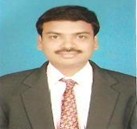
SURU NAVEEN KUMAR

SURU NAVEEN KUMAR

Assistant Professor

LEKKALA PAPU NAIDU

LEKKALA PAPU NAIDU

Assistant Professor
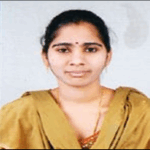
GIRIJA KUMARI KOLLURU

GIRIJA KUMARI KOLLURU

Assistant Professor
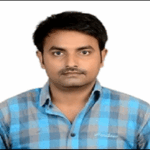
UPPU BHASKARARAO

UPPU BHASKARARAO

Assistant Professor

M.Venkata Krishna Prasad

M.Venkata Krishna Prasad

Assistant Professor

K. Sindhusha

K. Sindhusha

Assistant Professor

M.Kiran Kumar

M.Kiran Kumar

Assistant Professor

P. Manoj

P. Manoj

Assistant Professor

P. Vineetha

P. Vineetha

Assistant Professor

L. Sadvika

L. Sadvika

Assistant Professor

V. Vasavi

V. Vasavi

Assistant Professor

A. Sowjanya

A. Sowjanya

Programmer

G. Swathi

G. Swathi

Programmer

R. Govinda

R. Govinda

Programmer